Average Roof Replacement Cost in the U.S.: 2026 Data & Insights
January 27, 2026
Roof replacement costs in the U.S. now range from $11,000 to $25,000+ nationwide in 2026, driven by 5–8% material inflation, 6–10% higher labor costs from installer shortages, stricter insurance rules, and updated building codes in extreme-weather regions.
This comprehensive guide covers national averages, material comparisons, regional pricing, hidden additional costs, and proven strategies to build your roof replacement budget, perfect for homeowners validating roofing contractors' quotes or comparing asphalt shingles vs metal roofing.
Key Takeaways
- Average roof replacement cost 2026: $15K–$22K for typical 1,700-2,000 sq ft homes ($7–$15 per square foot) with architectural shingles.
- Asphalt shingles (65% market): Range $3.50–$9/sq ft; metal roofing premium at $10–$18/sq ft but lasts 50+ years vs asphalt's 15-50 years.
- Labor costs (35-45% of total cost): Vary $2.50–$12/sq ft by region, pitch, and complexity. Get 3+ certified contractor quotes.
- Roof size drives economies: Larger is equal to lower cost per square foot; steep pitches, dormers add 15-40% to roofing costs.
Get your free roof replacement cost calculator 2026 estimate now! enter home size, zip code, and pitch for instant pricing.
2026 National Average Roof Replacement Cost: The Quick Answer
Most homeowners pay $15,000–$22,000 for a typical 1,700-2,000 sq ft roof replacement ($7–$15 per square foot installed).
This covers architectural asphalt shingles (65% market share), full tear-off of old roof, new underlayment, flashing, and roofing contractors' labor.
| Home Size | Est. Roof Area | Total Cost Range |
|---|---|---|
| 1,500 sq ft | 1,700 sq ft | $12K–$20K |
| 2,000 sq ft | 2,300 sq ft | $16K–$26K |
| 2,500 sq ft | 2,900 sq ft | $20K–$35K |
The Data Behind 2026 Roof Costs: What "Average" Really Means
Average hides massive variation simple gable roofs cost $7/sq ft while complex roof design with skylights, chimneys, and steep pitches hit $18+/sq ft. Here's what roofing contractors actually include:
- Tear-off: 1-2 layers old roofing material plus disposal ($1–$3/sq ft)
- Roof deck repairs: Rotted plywood/OSB replacement ($2K–$10K+)
- Underlayment: Synthetic or ice & water shield in valleys
- Flashing: Drip edge, chimney, skylight seals
- Ventilation: Ridge vents, intake soffits
Also Read: Roof Replacement Cost in Houston: Real Prices & What to Expect
Roof Replacement Cost by Material in 2026: Complete Breakdown
When budgeting for roof replacement, roofing material choice drives 45-55% of total cost while determining lifespan, maintenance, and home value impact.
2026 pricing reflects material cost inflation (5-8%) plus labor costs varying by installation complexity. Here's how major roof type options compare across upfront investment vs decades-long value.
Asphalt Shingles: Market Leader (65% U.S. Homes)
Asphalt shingles dominate due to affordability, availability, and insurance acceptance across all climate considerations.
- 3-tab shingles ($3.50–$6/sq ft, $10K–$15K total for 1,700 sq ft home): Budget option with 15-20 year life. Exposed cutouts create a classic look but lower wind/hail resistance.
- Architectural asphalt shingles ($5–$9/sq ft, $16K–$22K total): Laminated design mimics premium materials with 30-50 year manufacturer warranties, Class 4 impact ratings. Best balance of cost-to-performance.
Metal Roofing: Long-Term Winner
Metal roofing crushes asphalt on longevity while cutting cooling costs 15-25% through reflective surfaces. Higher upfront cost offset by zero re-roofing for lifetime homeowners.
- Standing seam metal ($12–$18/sq ft): Premium clip systems, hidden fasteners, sleek modern aesthetic. 70+ year durability.
- Corrugated metal / exposed fastener panels ($10–$14/sq ft): Affordable metal roofing option for barns, rural homes. 40-60 year life.
Tile Roofing: Regional Favorite (Warm Climates)
Clay tile roofs and concrete tiles excel in extreme weather conditions (fire resistance, heat reflection) but demand structural assessment.
- Clay tiles ($15–$25/sq ft): Authentic Mediterranean/Southwest aesthetic, 75-100+ years with proper underlayment.
- Concrete tiles ($12–$18/sq ft): Lighter weight, lower cost to replace, mimics clay appearance.
Slate Roofing: Luxury Choice
Natural slate tiles represent the ultimate premium materials investment virtually indestructible when professionally installed.
- Natural slate ($20–$30/sq ft): Quarried stone lasts multiple home ownership cycles. Unmatched fire/water resistance.
- Synthetic slate ($12–$20/sq ft): Polymer/rubber composites mimic appearance at half the weight and cost.
Wood Shakes/Shingles Roofing
Wood shakes (hand-split, rustic) and wood shingles (sawn, uniform) deliver premium natural aesthetics but require ongoing maintenance and face fire ratings restrictions in many regions.
- Cedar shakes/shingles dominate (80% market): $9–$16/sq ft installed, $16K–$32K for 2,000 sq ft roof
- Redwood premium: $12–$18/sq ft (coastal areas)
- Maintenance reality: Annual cleaning, fire-retardant treatments, and moss control add $500–$1,500/year
Flat & Low-Slope Systems
Flat and low-slope roofing systems suit roofs with minimal pitch (under 3:12), using membrane materials for waterproofing where shingles fail.
- TPO ($6–$11/sq ft, 25-35 years): White, heat-welded thermoplastic reflects sunlight, cuts cooling 20-30%—commercial warehouses lead adoption.
- EPDM ($5–$9/sq ft, 30-50 years): Black rubber sheets, ballasted or glued; durable for large commercial roofs but absorbs heat.
- Modified Bitumen ($6–$12/sq ft, 20-30 years): Asphalt rolls, torch-applied layers; handles cold climates on residential additions.
Roof Cost Comparison by Home Size (2026)
Flat roof replacement costs in 2026 scale directly with home size, roof complexity, stories, and pitch typically $7–$15/sq ft for architectural shingles on average homes.
| Home Size | Roof Area | Cost Range | Stories | Roofline |
|---|---|---|---|---|
| Small Home | 1,000 sq ft | $10K–$15K | Single | Simple gable |
| Mid-Size | 1,700 sq ft | $16K–$22K | Two | Moderate (2 gables) |
| Large Home | 3,000 sq ft | $28K–$45K | 2-3 | Complex (valleys/dormers) |
Also Read: Roof Replacement Cost Financing & Payment Plans Explained
Biggest Factors That Change Roof Replacement Cost
Roof replacement costs in 2026 rarely match online averages these 10 factors swing quotes 20-100% beyond material choice.
Roof Size & "Squares"
Roof size drives 60-70% of total cost variation, measured in "squares" (1 square = 100 sq ft of roof surface area). Larger roofs benefit from economies of scale, dropping $/sq ft from $12 (small) to $8 (large), but absolute dollars skyrocket. A 1,000 sq ft roof (10 squares) costs $10K–$15K, while 3,000 sq ft (30 squares) hits $28K–$45K. Ground footprint × 1.54 multiplier gives actual roof area.
Pitch & Accessibility
Roof pitch determines labor danger pay 4:12 gentle slopes use standard ladders, while 8:12+ steep pitches demand 25-40% extra for harnesses, scaffolding, and insurance. Single-story homes allow ground access; multi-story adds crane costs and OSHA compliance. Steep roofs also shed water faster, reducing leak risk but spiking install time 50%.
Roof Complexity
Simple gable roofs price at base rate, but each valley, dormer, hip, chimney, or skylight multiplies leak points and flashing needs, adding 15-30% to labor/materials. Complex roofs require custom metalwork ($500–$1K per chimney alone) and precision cutting. Victorian or custom homes with 5+ features easily add $5K–$15K. Count features during inspection.
Tear-Off Layers & Disposal
Single-layer tear-off hides in base pricing, but double layers trigger $1–$2/sq ft dumpster fees and 2x labor (old shingles weigh 200–300 lbs/square). Landfill restrictions push recycling costs up 10% yearly. Always verify layers via attic inspection 3 layers can double small roof budgets.
Decking Repairs
Water-damaged plywood/OSB sheathing discovered during tear-off becomes the #1 surprise expense at $2K–$10K (25-50% of small roof cost). Soft spots signal chronic leaks; full sheet replacement runs $25–$40 each. Rotted decking compromises new shingles mandatory fix for new shingles. Probe during the estimate walk.
Ventilation & Insulation
Code-minimum soffit/ridge vents come standard, but upgraded systems (mushroom vents, power fans) cost $1K–$5K while cutting energy 10-20% via better attic airflow. Re-roof triggers insulation mandates in cold climates. Ridge vents offer the best ROI; spray foam adds premium but slashes bills.
Local Labor Costs
Labor (35-50% of total) varies 3X by region rural Midwest charges $2–$4/sq ft, coastal metros hit $5–$12/sq ft due to union wages, insurance, and demand. Supply chain delays amplify summer pricing. Compare 3 local quotes; satellite imagery reveals neighbor roof ages.
Permits & Codes
Municipal permits run $200–$1K; hurricane/wind zones mandate impact-rated shingles and engineering stamps. HOA/preservation boards add 2-6 weeks of approval. Missing permits kills insurance claims and resale value. Verify requirements before contractor selection.
Seasonality
Contractor backlogs peak in summer (15-25% premium), while winter offers 10-20% discounts (weather permitting). Spring/fall provides balance. Off-season scheduling skips 4-8 week waits. Cold-weather asphalt installs viable above 40°F.
Warranty Level
Basic 25-year prorated warranties match standard pricing; enhanced 50-year non-prorated or lifetime transferable versions add 10-20% for premium underlayment/fasteners. Read exclusions (wind/hail limits). Transferable protects resale; contractor warranties cover workmanship 5-10 years.
Roof Replacement Cost by Region
Roof replacement costs in 2026 vary 20-50% across U.S. regions due to labor rates, weather extremes, building codes, insurance mandates, and material supply chains.
| Region | Cost Range | Key Drivers |
|---|---|---|
| Northeast | $18K–$28K | Union labor, snow-load codes, slate tradition |
| Midwest | $14K–$22K | Affordable labor, tornado-resistant fasteners |
| South | $16K–$26K | Hurricane impact shingles, high humidity underlayment |
| West | $20K–$35K | Wildfire materials, steep terrain access, and seismic codes |
Additional Costs Homeowners Miss in 2026
70% of 2026 roof quotes miss $2K–$15K in hidden costs like gutters and deck rot.
- Gutters/downspouts: $1.5K–$5K
- Fascia/soffit repairs: $2K–$6K
- Chimney flashing rebuild: $800–$2K
- Skylight replacement: $1K–$3K
- Rotted wood replacement: $3K–$10K
- Mold remediation: $2K–$8K
- Upgraded underlayment: $500–$1.5K
- Ridge vents/intake vents: $800–$2K
- Structural reinforcement: $5K–$20K
Insurance, Storm Damage, and Roof Replacement in 2026
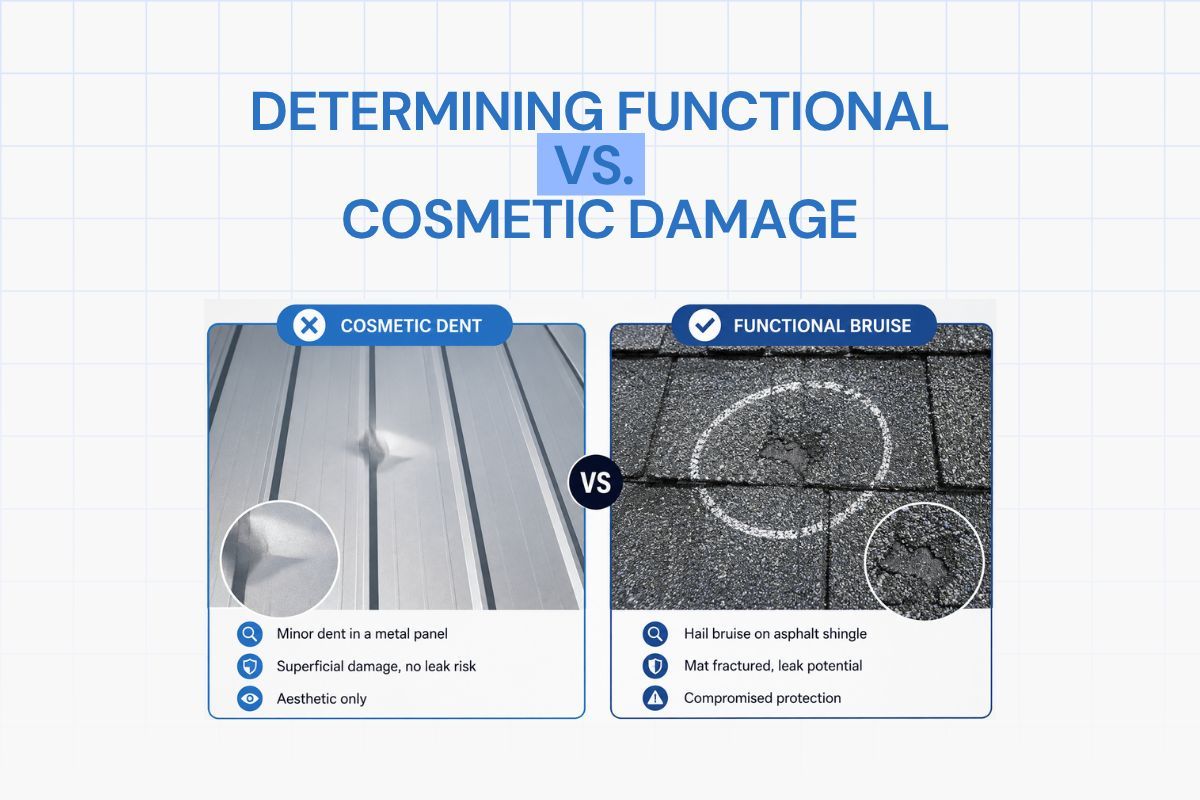
Insurers approve full replacement when damage compromises structural integrity (25-50% shingles affected). Repair handles isolated hits. Older roofs (10-15+ years) face depreciation. ACV (actual cash value) pays a reduced amount vs RCV (replacement cost value) after the deductible.
- Damage Threshold: 8 or more hail hits per 10x10 sq ft test square typically triggers full replacement instead of spot repairs.
- Structural Integrity: 25 to 50 percent shingle damage requires replacement, while isolated hits need only repair.
- Roof Age Impact: Roofs over 15 years face ACV depreciation, which pays less than RCV.
- Cost Coverage: Replacement covers the new roof value while repair covers prorated material and labor only.
- Adjuster Decision: Professional roofer report often upgrades repair to replacement verdict.
- Claim Strategy: Document all damage and supplement later for hidden issues found during tear-off.
How to Get an Accurate Roof Replacement Estimate?
Precise measurements and comparable bids separate $16K jobs from $25K surprises. Skip DIY guesses, use proven methods to control costs.
Measure Your Roof Properly
Home footprint method: Start with your house's ground square footage from tax records or Google Maps. Multiply by 1.54 (standard pitch factor for 4:12 to 6:12 slopes, accounting for slope length). Add 10 percent buffer for hips, valleys, or dormers.
Example: 2,000 sq ft ranch home = 2,000 x 1.54 = 3,080 sq ft actual roof surface (30+ "squares"). Complex Victorians need 1.7+ multiplier.
Demand 3 Apples-to-Apples Quotes
Force identical scopes across bids:
- Roof area & layers: Confirm 2,800 sq ft, two-layer tear-off, no deck damage
- Material specs: GAF Timberline HDZ vs CertainTeed Landmark Pro (both Class 4 impact-rated)
- Underlayment: Synthetic felt PLUS Grace Ice & Water Shield (valleys, eaves, penetrations)
- Ventilation plan: Continuous ridge vent plus soffit intake (1:150 net free area ratio per code)
- Warranty coverage: 50-year limited transferable shingles plus 10-year workmanship guarantee
Spot Red Flags Instantly
Bids missing these details signal trouble ahead. Catch them early to avoid leaks, mold, and call-backs costing thousands later.
- Vague scope hides tear-off skips, thin underlayment. Demand sq ft breakdown.
- No ventilation plan guarantees attic mold, energy waste, and insurance claim denials.
- Missing flashing details (chimney, step, valley) = leaks within 2 years.
- Too-good pricing (under $7/sq ft total installed) signals 3-tab shingles, no ice shield, fly-by-night crews.
Also Read: The Environmental Benefits of Metal Roof Replacement (and Cost Impact)
Cost-Saving Options (2026)
Save 15-30% on roof replacement without sacrificing quality by timing, material choices, and bundling smartly.
- Off-season timing: Schedule winter or early spring installs for 10-20% discounts (contractor cash flow needs). Avoid summer peaks. Weather permitting above 40°F.
- Material strategy: Choose architectural asphalt shingles ($5-9/sq ft) over metal/tile premiums. Same 30-50 year life, Class 4 impact rating. 65% of homeowners pick this balance.
- Keep existing material: Skip tile-to-shingle structural upgrades ($5K-20K saved). Match current asphalt with asphalt. No truss engineering needed.
- Bundle gutters: Replace gutters during re-roof ($1.5K-5K) vs separate job (double labor). Contractors discount 20-30% bundled.
- Financing basics: 0% promo periods (12-18 months) cover deductibles. Check credit union rates vs contractor financing. Pay cash if possible for 5% material discounts.
Conclusion
Roof replacement represents one of the largest home investments in 2026, with costs driven primarily by roof size, material choice, pitch complexity, and regional labor typically spanning $10K to $45K for asphalt shingle systems on average homes.
Hidden expenses like deck repairs, chimney flashing, and ventilation upgrades frequently add 20-50 percent to quotes, while smart strategies such as off-season timing and bundled gutters deliver real savings without quality loss.
Instant free roof replacement cost calculator enters your home size, zip code, and roof pitch. Get accurate 2026 replacement cost in 30 seconds. No email required.
What is the average roof replacement cost in the U.S. in 2026?
The average roof replacement cost in the U.S. in 2026 ranges from $15,000 to $22,000 for a typical 1,700 square foot home using architectural shingles. This pricing equates to $7 to $15 per square foot installed and varies significantly by region, roof pitch, and complexity factors.
How much is a 2,000 sq ft roof replacement?
A 2,000 square foot roof replacement typically costs between $18,000 and $28,000 depending on material choice and local labor rates. This assumes a home footprint of approximately 1,300 square feet multiplied by the standard 1.54 pitch factor to reach the actual roof surface area. Homeowners should add a 10 percent buffer for complex rooflines containing valleys or dormers.
How long does a roof replacement take?
Roof replacement duration varies from 1 to 3 days for simple single-story gable roofs using crews of 4 to 8 workers. Complex multi-story homes with steep pitches require 3 to 7 days including setup of scaffolding and safety equipment. Weather conditions frequently add 1 to 2 days to the timeline, particularly during winter installations.
Is it cheaper to overlay shingles?
Overlaying new shingles over existing ones saves $3,000 to $7,000 compared to complete tear-off but compromises long-term performance. This approach voids manufacturer warranties, fails building code inspections, and reduces the new roof lifespan to about 10 years maximum. Industry standards recommend full tear-off for 95 percent of replacement projects.
What's included in a standard roof replacement?
Standard roof replacement includes tear-off of one existing layer, installation of synthetic underlayment, drip edge flashing, and basic ridge ventilation systems. Professional cleanup with magnetic nail sweeps and dumpster disposal fees also come standard. Deck repairs, gutter replacement, permits, and premium chimney flashing remain excluded from base pricing.
What time of year is cheapest to replace a roof?
Winter months and early spring provide the lowest pricing with 10 to 20 percent discounts due to reduced contractor demand. Summer represents peak season with 4 to 8 week backlogs and corresponding price premiums. Asphalt shingle installation remains viable above 40 degrees Fahrenheit with clear weather conditions.
How do I know if I need a full replacement or just repair?
Full roof replacement becomes necessary when 25 to 50 percent of shingles show damage or when 8 or more hail strikes appear per test square. Isolated hail damage or minor flashing issues qualify for spot repairs rather than complete replacement. Final determination rests with the insurance adjuster following professional roofer inspection.
Roof Replacement Cost Calculator Accuracy: How Close Are Online Estimates to Real Contractor Quotes?