Roof repair vs replacement cost: the decision framework every homeowner needs
August 5, 2026
When comparing roof repair vs. replacement cost, it's easy to focus on the upfront price. A repair may seem like the cheaper option today, while a full replacement can feel like a major expense. But the right decision depends on far more than cost alone. The age of your roof, the extent of the damage, your long-term plans for the home, and even your insurance coverage all play an important role in determining which option delivers the best value.
This guide gives you a practical framework to compare roof repair and replacement costs with confidence. You'll learn when a repair is the smarter investment, when replacement is unavoidable, how the 50% Rule works, and what warning signs to look for before making a decision. You'll also see five-year cost comparisons, contractor evaluation tips, and real-world scenarios to help you avoid unnecessary spending and choose the solution that protects both your home and your budget.
Key Takeaways
- Roof repair typically costs $350-$1,500 for isolated issues; meanwhile, a complete roof replacement runs $7,000-$18,000.
- If repair exceeds 50% of replacement cost, consider replacing. But for older roofs, even smaller repairs often make replacement the smarter choice.
- Your roof's age is the biggest factor. A 10-year-old roof can usually be repaired; a 22-year-old roof is past its warranty life and repair is usually temporary.
- Damage scope determines the decision. Less than 20% of your roof damaged? Repair makes sense. More than 50%? Replace.
- If a contractor recommends full replacement on a young roof with storm damage, get a second opinion. Upselling happens.
- The real cost math favors replacing older roofs. Spending $1,200 to repair a 20-year-old roof often leads to $4,000+ in additional repairs over the next five years. Replacement costs more upfront but is cost-effective.
Understanding the Roof Repair vs Replacement Landscape
Roofing costs aren't abstract numbers; they're decisions that shape the safety, value, and comfort of your home. Whether you're weighing a quick repair or a full replacement, the stakes are high: budgets, home's resale value, insurance coverage, and peace of mind all sit on the line.
This framework is designed to cut through sales talk and averages, giving a clear, structured way to compare repair and replacement. With real scenarios, cost breakdowns, and trust signals to evaluate a contractor's advice, you'll have the tool to make a choice that's practical, transparent, and financially sound.
Common Signs You Need Roof Repair vs. Replacement
One of the biggest mistakes homeowners make is focusing on cost before understanding the actual condition of their roof. A leak doesn't automatically mean you need a new roof, just as replacing a few shingles won't solve problems caused by an ageing roofing system.
The easiest way to decide is by looking at the type of damage. Localised problems are usually repairable, while widespread wear or structural issues often make replacement the smarter long-term investment.
| Roofing Issue | Usually Repair | Usually Replace |
|---|---|---|
| A few missing or cracked shingles | ✓ | |
| Damaged flashing around chimneys or skylights | ✓ | |
| Small leak in one area | ✓ | |
| Storm damage affecting less than 20% of the roof | ✓ | |
| Multiple leaks across different rooms | ✓ | |
| Sagging roof deck | ✓ | |
| Widespread granule loss on asphalt shingles | ✓ | |
| Rotting roof decking | ✓ | |
| Roof older than 20 years with recurring repairs | ✓ |
If your roof is relatively new and the damage is limited to one section, a repair is usually all that's needed. However, if you're dealing with repeated leaks, widespread deterioration, or a roof nearing the end of its expected lifespan, replacing it often saves more money over the next decade than continuing to patch the same problems
Roof Repair vs Replacement: Average Costs at a Glance
Deciding whether to replace or repair is quite a tricky decision point with real financial consequences, and you need actual guidance instead of vague generalizations. Let's talk about how to think through this clearly, with the specific numbers and frameworks that actually determine whether you repair or replace.
| Scope | Typical Cost Range | Timeframe | Best When |
|---|---|---|---|
| Minor repair (1-5 shingles) | $150-$450 | 2-4 hours | Isolated storm damage, roof under 10 years old |
| Moderate repair (partial slope) | $600-$1,800 | 1 day | One slope is damaged, and the rest of the roof is in good shape |
| Major repair (multiple areas) | $1,800-$4,500 | 1-2 days | Age 10–18 years, multiple but not widespread structural damage |
| Full replacement (asphalt) | $7,000-$15,000 | 1-2 days | Age 20+, widespread damage, or failed decking |
| Full replacement (metal) | $12,000-$25,000 | 2-4 days | Final long-term solution, hail area, energy savings priority |
| Full replacement (tile/slate) | $18,000-$40,000+ | 3-7 days | Premium homes, maximum lifespan required |
When you're evaluating quotes, understanding the cost landscape helps you recognize whether you're looking at a reasonable repair or an overpriced replacement pitch. To see how those numbers stack up for your own roof, plug the details into our free Roof Replacement Cost Calculator. It gives you a tailored estimate in minutes and keeps the conversation grounded in real data.
1. Repair costs vary dramatically by scope
- A minor repair with maybe a few missing shingles or isolated damage to one area typically runs $150 to $450. You're paying for the contractor to show up, replace some shingles, and seal things. This takes a couple of hours.
- A moderate damage repair covering a partial slope or multiple isolated issues goes $600 to $1,800. This is still one-day work, but it involves more material and time.
- Major repairs spanning multiple areas of your roof run $1,800 to $4,500. This is usually a 1-2 day project.
2. Replacement costs depend on material and scope
- A full asphalt shingle replacement on an average home (1,500-2,000 square feet) costs $7,000 to $15,000 installed. This is your standard option.
- Metal roofing replacement costs $12,000 to $25,000 because materials and installation are more specialized. But it lasts 40+ years versus asphalt's 20-25 years.
- Premium materials (tile, slate, high-end composites) start at $18,000 and go much higher, but these are for people choosing premium roofing as a lifestyle choice, not a necessity.
Compare costs, lifespan, and damage severity to choose the best through the help of your blog: Roof Replacement Cost vs Roof Repair Cost: Make the Right Choice.
If your repair quote is more than half your replacement quote, the math starts pointing toward replacement. But there's more to it than just that rule.
The 50% Rule (And Why It's More Complicated Than It Sounds)
The idea of choosing roof replacement if your repair cost exceeds 50% of the replacement cost sounds simple, and for many situations, it's the right thing to do. But it needs context.
If your roof replacement would cost $12,000 and someone quotes you $6,500 to repair, the 50% rule says "replace." And that's usually correct; you're spending more than half the replacement cost to temporarily fix a problem that's probably going to recur.
But here's where the rule breaks down: a 10-year-old roof with 10 to 15 years of life left makes sense to repair at 50% of replacement cost. A 24-year-old roof with maybe a year left doesn't. Spending $1,500 repairing a roof that's about to fail anyway is just delaying the inevitable.
The real version of the rule is: if your roof is within five years of its expected end-of-life, any repair over $1,000 should trigger a replacement quote comparison.
For most asphalt shingles, expect 20-25 years of roof life. For metal, 40+ years.
Do the math: if your roof is 19 years old and someone quotes $1,800 to repair it, get a replacement quote. You're likely replacing within five years anyway, so you're just paying twice: once for the repair, once for the replacement. Be smart and stop throwing money.
The Roof Replacement vs Repair Decision Matrix
Here's the practical tool that cuts through confusion. Find your roof age and damage scope, and you get a clear answer:
| Roof Age | Damage < 20% surface | Damage 20–50% surface | Damage > 50% surface |
|---|---|---|---|
| Under 10 years | REPAIR | REPAIR | REPAIR or REPLACE (get both quotes) |
| 10–15 years | REPAIR | REPAIR (if < $2,000) | REPLACE |
| 15–20 years | REPAIR (if < $1,500) | REPLACE | REPLACE |
| Over 20 years | REPLACE (assess full) | REPLACE | REPLACE |
| 25+ years (end of life) | REPLACE | REPLACE | REPLACE immediately |
How to use this: Find your roof age (when was it installed?) and estimate your damage scope (is it localized, or spread across multiple slopes?). The intersection tells you the obvious answer.
Exception rule: If your contractor finds rotted decking when they do a roof inspection, replace. If your insurance approves a full replacement after storm damage, take it; don't let someone "negotiate" you into repeated repair. If your home was built before 1980 and contains asbestos roofing material, any repair work needs special handling and may make replacement simpler.
The decision matrix shows you the cost path, but financing determines whether it’s realistic. Explore our Roof Financing Options for 2025 guide to see practical ways to cover repairs or replacements without straining your budget.
Does the Roofing Material Change the Repair vs. Replacement Decision?
Absolutely. While roof age and damage are the biggest decision factors, the type of roofing material also plays an important role. Some materials are designed to last for decades and can often be repaired multiple times, while others become less cost-effective to repair as they approach the end of their expected lifespan.
| Roofing Materia | Typical Lifespan | Repair or Replace? |
|---|---|---|
| Asphalt Shingles | 20 to 30 years | Repair when damage is isolated. Replace once ageing becomes widespread. |
| Metal Roofing | 40 to 70 years | Repairs are usually worthwhile unless there is major structural damage |
| Cedar Shake | 25 to 35 years | Repair isolated damage, but replace if rot has spread throughout the roof. |
| Clay or Concrete Tile | 50+ years | Broken tiles can usually be replaced individually. Full replacement is rarely needed unless the underlayment has failed. |
| Slate Roofing | 75 to 100+ years | Most slate roofs can be repaired for decades before replacement becomes necessary |
For example, replacing a few damaged slate tiles is far more economical than replacing an entire slate roof that still has decades of life remaining. On the other hand, an asphalt roof with curling shingles, widespread granule loss, and repeated leaks is usually signalling that repairs are only delaying an inevitable replacement.
When comparing roof repair vs. replacement cost, always consider both the repair bill and the remaining lifespan of your roofing material. Spending $2,000 repairing a roof with only two years of life left rarely provides good value.
When Repair Actually Makes Sense: Specific Scenarios
Not every roofing issue calls for a full tear‑off and replacement. In fact, repairs are often the smarter, more economical choice when the roof is still structurally sound, and the damage is isolated. Repair is the right choice in specific situations. Let’s walk through the scenarios where saying “no” to unnecessary replacement makes sense, and where a targeted fix can save both money and hassle.
- Storm damage on a newer roof is the classic repair case. Your roof is 7 years old, and a storm ripped off some shingles or caused hail damage. The damage is isolated, visible in one or two spots, and repair costs $400-$900. This is straightforward: repair it, move on.
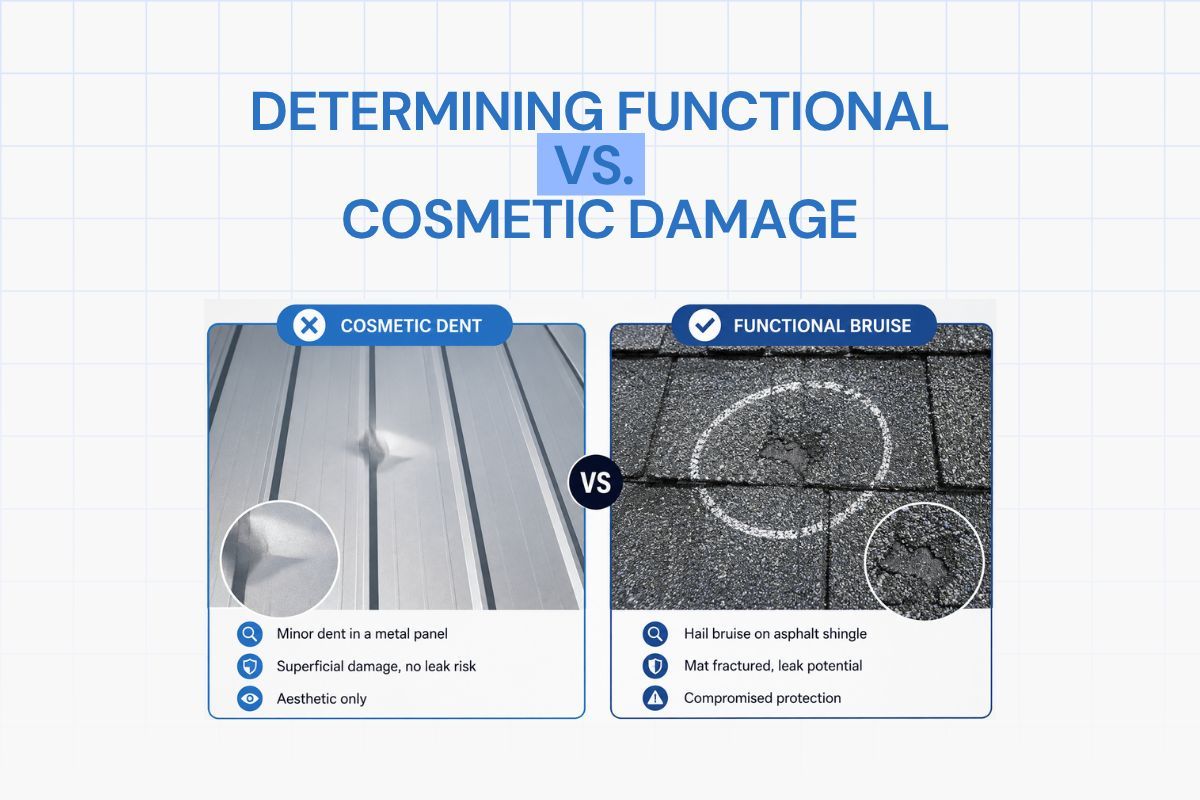
- Flashing failures around chimneys, skylights, or walls are usually repair jobs. The flashing (the metal component integrating the roof with these structures) fails before the roof does. Fixing it costs $200-$800. A full roof replacement doesn't make sense when the roof itself is still good.
- Tree impact damage is another repair scenario. A branch punches through your roof in a localized area, causing damage to maybe 4-5 square feet. Repair cost is $600-$1,500. Your roof is otherwise fine. You repair the damage and address why the tree situation exists (trim the tree, or plan removal).
- Ventilation issues causing moisture and minor decking damage might trigger a repair. In these cases, the first step is correcting the ventilation problem. Once airflow is restored, a localized roof repair can follow. This approach tackles the root cause instead of just patching symptoms.
Repair makes sense when the roof is fundamentally sound and the damage is contained. Replacement solves systemic problems, but repair is the right call when the issue is isolated. Contractors who can explain this distinction clearly build trust and help homeowners avoid overspending on work they don’t need.
If you’re leaning toward repair, make sure you’ve seen the bigger picture. Check out our Roof Replacement Cost vs. Repair Cost guide; it compares five‑year scenarios so you can decide if repairs truly protect your wallet.
When Replacement Makes Sense: Specific Scenarios
On the contrary, there are situations where repair is just prolonging the inevitable, and replacement makes financial sense. Let us have a look at those situations:
- Age-driven failure shows up as shingles granulating into your gutters, widespread issues like tab cracking, or consistent roof leaks across different locations. When your roof is failing not because of one storm or one failure point, but because the whole thing is aging, repair won't fix the underlying problem. You're managing decline, not solving it. Replacement addresses the root cause.
- Decking damage discovered during inspection often makes replacement the economic choice. Your contractor removes a small section to inspect, and finds wet or rotted OSB or plywood underneath. The extent usually justifies full replacement. Spot-replacing decking on a 20-year-old roof and hoping the rest doesn't rot soon is poor economics.
- Planning to sell your home makes replacement financially sensible. A new roof typically returns $7,000-$12,000 in home value on a $10,000-$15,000 investment. Inspectors and buyers worry about repair-only solutions. New roof = confidence to buyers, easier sale.
- Insurance approvals for full replacement after storm damage are gifts; take them. If an adjuster approves full replacement after storm damage, do not negotiate yourself down to "just repair" to save money. Your insurance company has already deemed it appropriate. Use the coverage you have.
- Energy & Insurance Savings: Upgrading to Class 4 impact‑resistant shingles or a cool‑roof metal system can cut annual insurance premiums by $300-$1,000. Beyond savings, these materials improve energy efficiency and resilience. Factoring this into your payback calculation often makes replacement the smarter long‑run move.
Replacement makes sense when the roof’s core system is compromised, when insurance covers the cost, or when long‑term savings outweigh short‑term fixes. Whether it’s boosting resale value, cutting insurance premiums, or eliminating recurring small leaks, a full replacement often delivers better returns than piecemeal repairs. Contractors who can clearly explain these scenarios build trust and ensure homeowners make decisions that stand the test of time.
Numbers tell one side of the story, but signs tell the other. Check out our Ultimate Homeowner’s Checklist to see the physical cues that confirm when you need a new roof.
How to Evaluate a Contractor's Recommendation
This is where trust matters. Most contractors are honest. Some aren't. Most homeowners often feel uneasy when a contractor recommends a full roof replacement. It’s a significant investment, and the fear of being upsold is real. This section gives you an independent framework to evaluate whether that recommendation is genuine or inflated.
1. Get a Second Opinion
- If a contractor recommends a full replacement on a roof under 15 years old, don’t rush. While there are legitimate cases (like severe storm damage or hidden structural issues), upselling repair into replacement is common.
- A second opinion gives you perspective, helps confirm whether replacement is truly necessary, and often reveals if the first contractor exaggerated the scope.
2. Ask for Photos of the Damage
- Reputable contractors document their inspections. They’ll show you photos of cracked shingles, rotted decking, or failed flashing so you can see the problem yourself.
- If a contractor refuses to provide photos, that’s a red flag. Visual evidence builds trust and ensures you’re not agreeing to work based on vague claims.
3. Request an Itemized Quote
- A lump‑sum number tells you nothing. An itemized quote breaks down labor, materials, tear‑off, disposal, and extras.
- This transparency prevents hidden markups and lets you compare quotes fairly. For example, one contractor might charge more for labor but less for materials; without itemization, you’d never know.
4. Red Flags for Unnecessary Replacement
Watch out for contractors who:
- Knock on your door right after a storm (“storm chasers”)
- Quote quickly without a thorough inspection
- Pressure you with urgency (“we can only do this price this week”)
- Refuse to provide a written scope of work
These tactics are designed to push you into fast decisions, not informed ones.
5. Green Flags for Honest Recommendations
Trustworthy contractors do the opposite:
- Provide photos and explain exactly what failed and why
- Offer both repair and replacement options, with pros and cons of each
- Give you time to decide without pressure
These behaviors show they value your trust more than a quick sale.
By learning how to ask the right questions and spot red flags, you’ll feel confident making decisions based on facts, not pressure.
Evaluating a contractor’s recommendation is easier when you know what to ask up front. Our guide What to Ask a Roofer: 10 Essential Questions for Your First Meeting gives you a ready‑made list to keep the conversation transparent and prevent upselling. When you insist on photos, itemized quotes, and second opinions, you protect yourself from upselling and gain confidence in your decision. The best contractors welcome this scrutiny because transparency builds long‑term trust. In roofing, honesty isn’t just a virtue; it’s the foundation of every successful project.
The Cost-Benefit Calculation: Repair vs Replace Over Time
When deciding between repair and replacement, the smartest move is to understand how those costs play out over time. A roof that’s nearing the end of its lifespan can turn into a money pit if you keep patching it. This framework helps you compare short‑term savings against long‑term value, so you can make a decision that’s financially sound, not just convenient.
Use this framework to calculate the real cost of your decision:
| Scenario | Year 1 Cost | Years 2–5 Cost (est.) | Total 5-Year Cost |
|---|---|---|---|
| Repair (20-year-old roof) | $1,200 | $3,000-$6,000 (continued repairs) | $4,200-$7,200 |
| Replace (same 20-year-old roof) | $12,000 | $0-$500 (minor maintenance) | $12,000-$12,500 |
| Repair (10-year-old roof) | $900 | $300-$800 (minimal) | $1,200-$1,700 |
| Replace (10-year-old roof) | $12,000 | $0-$300 | $12,000-$12,300 |
Think of repair costs as a slow leak in your budget. Each patch buys a little time but rarely adds meaningful life to the roof. Over five years, those small invoices accumulate, and you’re still left with an aging system that’s vulnerable to leaks, decking rot, and insulation damage.
Replacement, on the other hand, resets the clock. The upfront cost is higher, but maintenance stays minimal for years. You gain peace of mind, warranty coverage, and improved energy efficiency. For newer roofs (around 10 years old), repairs make sense because the roofing system still has plenty of life left. But once a roof crosses the 18 to 20-year mark, replacement becomes the smarter financial and structural decision.
Don’t just compare today’s invoice; compare the next five years. A well‑timed replacement can save thousands in cumulative repair costs and prevent emergency leaks that disrupt your home or business. Check our free Roof Replacement Cost Calculator to see the return on investment before you commit.
Key Insight: For a 20-year-old roof, the 5-year total cost of continued repairs ($4,200-$7,200) often approaches or exceeds the full replacement cost, while you end up replacing it anyway at year 22-23 when it fails. This math makes replacement the rational choice for older roofs even when the immediate repair seems cheaper.
A Quick Checklist Before You Decide
Even after comparing costs and reviewing the decision matrix, it's worth taking a final step before signing a contract. These questions can help confirm whether repair or replacement is the better investment for your home.
- Is your roof more than 20 years old?
- Is the damage spread across multiple areas instead of one isolated section?
- Have you paid for roof repairs more than once in the last few years?
- Did your contractor show photos of the damaged shingles, flashing, or decking?
- Have you received at least two written estimates from licensed roofing contractors?
- Will your homeowners insurance cover part or all of a roof replacement?
- Will repairing the roof simply delay a replacement you'll likely need within the next few years?
If you answered "Yes" to most of these questions, replacing the roof will often provide better long-term value than continuing to invest in repairs. If your roof is still relatively young and the damage is limited to a small area, a professional repair is usually the more practical and cost-effective solution.
Remember, the goal isn't to choose the cheaper option today. It's to choose the option that gives you the lowest total cost over the life of your roof.
Conclusion
At the end of the day, it is all about peace of mind. A roof repair buys you time when the system still has life left. A replacement resets the clock when age or repeated leaks make patchwork pointless. The real win is knowing you're not guessing but making a decision backed by math, photos, and a clear framework.
Don't leave it to gut feeling. Run your own numbers with our free roof replacement cost calculator to see what repair vs. replacement looks like for your home. And if you'd rather talk it through, reach out via our Contact Us page and we'll walk you through the options without the sales pressure.
How do I know if I need a full roof replacement or just repairs?
Inspect for three things: age (20+ years = likely replacement), extent of damage (more than 30% of surface area = likely replacement), and decking condition (if contractors find rotted or wet OSB during inspection, replacement is usually necessary). When in doubt, get quotes from two licensed contractors, not just one.
What is the 50% Rule for roofing?
The 50% Rule states that if the cost to repair your roof exceeds 50% of the cost of a full replacement, you should replace it instead. For a $12,000 replacement, any repair quote over $6,000 triggers the rule. The rule is most applicable to mid-age roofs (10–18 years); for roofs over 20 years, even a $2,000–$3,000 repair bill warrants a replacement comparison.
Does repairing a roof add value to my home?
Repair prevents value loss (a failing roof deducts $5,000–$15,000 from sale price) more than it adds value. Full replacement is the stronger value-add — NARI's Cost vs Value report estimates roof replacement recoups 60–65% of cost at resale. If you're planning to sell within 2 years, replacement is typically the better financial move.
Will my insurance pay for roof repair or replacement?
It depends on the cause. Storm damage (hail, wind) is typically covered for replacement cost if the roof is under 20 years old on an RCV policy. Wear and tear or age failure is seldom covered. If a storm is involved, file a claim before authorising any repair. Once repairs are made, adjusters lose the ability to assess the original damage scope.
Can I repair just part of my roof?
Yes, partial replacement of one slope or section is common and code-compliant in most jurisdictions. However, if the rest of the roof is within 5 years of its end-of-life, partial replacement often creates a mismatched appearance and doesn't address the underlying ageing. Get a written assessment of the rest of the roof before committing to partial work.
Roof Replacement Cost Calculator Accuracy: How Close Are Online Estimates to Real Contractor Quotes?